
See the film before you shoot it.
Direction survives contact with generation only if intent is written down in a form the system can act on. Every shot is a structured specification — framing, lens, camera move, blocking, performance, lighting — so what you asked for is what gets built, and what you rejected stays rejected.
What you get
The capabilities that matter most to this role.
Specify framing, focal length, camera movement, subject blocking, action and performance in cinematography language rather than prose prompts.
Generate storyboards and coverage proposals per scene, reorder and annotate them, then convert only the approved frames into shots.
Multi-take grid with synchronised playback and A/B compare, each take pre-scored against the spec so your attention goes to real candidates.
Approvals are first-class workflow states. A promoted take carries its prompt, model, seed, references and rationale with it.
Say what must not appear — no helmet, no modern objects, no extra jewellery — and have it enforced rather than hoped for.
Automatic model routing is an optimisation, never a replacement for judgement. You can pin any shot to any model.
Your workflow
Where you sit in the production graph, start to finish.
- 1Read the breakdown
Scenes, beats, cast, locations and continuity events, extracted from the locked script.
- 2Set the visual language
Palette, contrast, lenses, film stock, lighting and motion rules in the style bible.
- 3Approve coverage
Storyboard frames and shot lists per scene, adjusted until the coverage is right.
- 4Design the shots
Turn approved frames into structured shot specs with references attached.
- 5Review takes
Draft takes arrive scored. Compare, comment, reject or promote to hero quality.
- 6Lock the sequence
Approved takes flow to the edit with full lineage back to your decisions.
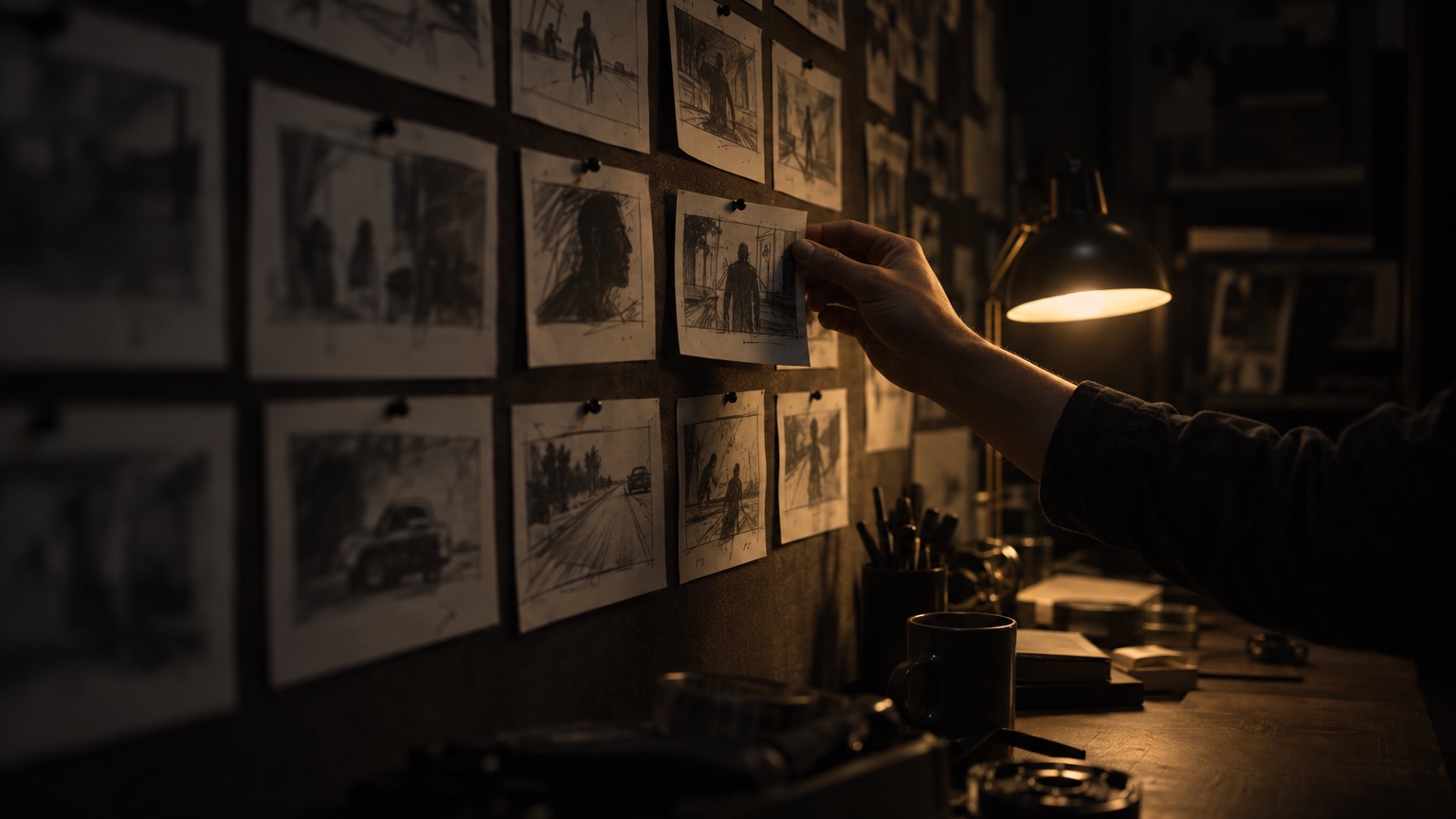
Approve the coverage before anything is generated.
Storyboard frames and shot lists per scene, reordered and annotated until the coverage is right — only then do approved frames become shots.
What this solves
The failure modes generative production runs into, and how the platform answers them.
| The problem | How VFX.plus handles it |
|---|---|
| Results drift from intent | Shots are specifications, not prompts. Framing, lens and blocking are fields, not adjectives. |
| Characters change between shots | Reference packs and continuity state carry identity, wardrobe and props across every scene. |
| Too many takes to review | Automated QC rejects obvious failures and ranks the rest before they reach you. |
| No record of why | Every approval stores the prompt, model, seed, references and reviewer. |
Built for every other role too


Ready to bring your team into the loop?
Request early access and we'll walk through your production.